ClimateWise Enews April 2015
In this issue:
- Why You Should Be at the National Adaptation Forum
- Whole Community Adaptation: Testing the Concept
- Whole Community Adaptation in the Real World: A Framework for Creating Lasting Solutions
- Talking about Climate Change
- First, Do No Harm: Recognizing and Preventing Maladaptation
Whole Community Adaptation: Testing the Concept
Please help us by filling out our survey!
As climate change continues to unfold, we are seeing it touch and alter every part of our communities. As decision makers respond, they need to be aware of how others are impacted and how they are also responding. Without cross-sector coordination, our experience tells us that actions in one sector are likely to exacerbate climate change impacts to other sectors, simply shifting the risk instead of increasing overall resilience. At the Geos Institute, we have developed an approach to climate change preparedness called “Whole Community Adaptation.” This approach involves working across sectors to foster a more holistic understanding of the variety of impacts across a community. We think it works better than single sector planning, which focuses specifically on one particular issue (water, transportation, health impacts, etc.), but have not yet tested that premise from a research standpoint. That is, until now. In order to test whether Whole Community Adaptation works better than single sector planning in creating community resilience, we have initiated a comparative research project. We are looking at whether the types of adaptation strategies developed in cross-sector planning adaptation planning processes differ from those developed using traditional single-sector adaptation planning processes. To move this research along, our ClimateWise team is reviewing adaptation plans from both cross-sector and single sector planning processes. Some of the questions we hope to answer include:
- Are adaptation strategies developed in cross-sector planning processes more or less likely to result in conflict or maladaptation?
- Are adaptation strategies developed in cross-sector planning processes more or less likely to result in co-benefits to other resources and populations?
- Are adaptation strategies developed in cross-sector planning processes more or less likely to increase greenhouse gas emissions?
- What types of planning frameworks have been used to develop cross-sector adaptation strategies?
If you have been involved in a planning process that incorporated climate change, please fill out our 10-question survey on the process and the types of strategies that were developed.
If you are familiar with an adaptation plan or strategy development process that you think we should include in our review, please contact Dr. Marni Koopman. Remember, we need both single sector and multi-sector plans for our study.
Sharing our experiences and learning at this time is incredibly important for the development of best practices for building climate change resilience in our communities. Thank you!
Talking about Climate Change
 Climate change is an awkward subject to talk about. In some circles, bringing up the topic can lead to an acute case of silence (cue crickets). But we need to be talking about it in all circles and especially in decision-making capacities. One of the leading organizations on climate change communication is Climate Access. We recently listened in on a Climate Access webinar on how to talk about climate change during extreme cold and snow events. They suggested communicating the links between climate change and changes in the jet stream or polar vortex destabilization to show how larger storms are one of the many outcomes of accelerating climate change. Climate Access has also released a new report that provides guidance for local leaders in how to move people to action with solutions-based messaging. In preparing the report, they investigated American attitudes, experiences, and terminology preferences.
Some important findings:
- “Preparedness” and “readiness” are preferred terms over “adaptation” and “resilience”
- 74% of survey respondents support taking precautionary actions now rather than waiting to respond to worsening climate change impacts
- Extreme events present an opportunity for communication and outreach to help build awareness that climate change is affecting us now
- Effective communications focus on local and current climate impacts and what can be done to prepare for additional impacts instead of waiting until it is too costly or too late to act
- Conversations about the science create polarization while conversations about the solutions bridge the political divide
- It is important to link to core American values like preparedness, ingenuity, and leadership to action on climate change
- Storytelling is a powerful technique for framing the issue
- Mitigation can be framed as a “preparedness” strategy – the most important way to reduce risk.
|
Why You Should Be at the National Adaptation Forum, May 12-14
 Two months from now, hundreds of climate change adaptation practitioners and service providers will descend on St. Louis, Missouri to share, learn, and be inspired at the 2nd National Adaptation Forum. Two months from now, hundreds of climate change adaptation practitioners and service providers will descend on St. Louis, Missouri to share, learn, and be inspired at the 2nd National Adaptation Forum.
The first forum, held in Denver in 2013, attracted over 500 people representing 44 states. The 2015 Forum expects to welcome an even larger crowd – a testament to the speed with which the nascent field of climate change adaptation is growing.
As a Forum sponsor, the ClimateWise® team will have an exhibit in the tradeshow and will organize two sessions – a working group that will take on the topic of maladaptation and a three hour training in the ClimateWise planning framework for local leaders.
Whole Community Adaptation in the Real World: A Framework for Creating Lasting Solutions
In this interactive training, participants will learn how to get started with adaptation, identify community vulnerabilities, integrate across diverse sectors, and make sure that implementation happens. Climate change is complex and an integrated, whole community approach is vital to long-term success.
Our team has carried out ClimateWise adaptation processes in several states and will share lessons learned and tools to make local efforts more successful. This training involves short presentations by experienced adaptation practitioners, group and breakout discussions, and role playing – participants might get to be a public health official, fisheries biologist, fire chief, or public works director!
This fun and informative training is appropriate for anyone who wants to help their community create solutions that work across sectors, make the best use of their resources, and reduce community conflict.
First, Do No Harm: Recognizing and Preventing Maladaptation
“Maladaptation” is a mouthful, but the topic is an important one for us to take up now that adaptation actions are being implemented and we are beginning to see some of the unintended consequences.
Maladaptation occurs when adaptation strategies have negative consequences, sometimes outweighing any benefit, especially over longer time frames. Maladaptive actions are those that:
- increase emissions of greenhouse gases,
- disproportionately burden the most vulnerable,
- have high opportunity costs,
- reduce the incentive to adapt, or
- create path dependencies that limit future generations (Barnett and O’Neill 2010).
Maladaptation can arise as a surprise when new and innovative approaches are tried, as a predictable “trade-off” to make gains in another area, or even due to mainstreaming, which relies on tools or frameworks that are already in place.
Working group participants will help to refine the definition of maladaptation, identify common examples of maladaptation, discuss how time frame and trade-offs play a role, investigate whether mainstreaming contributes to the problem, and identify planning frameworks that can be used to minimize the likelihood of maladaptation.
|

 The Kickoff was opened by a talented group of young musicians – the Daniel Chávez Quartet. Mayor John Stromberg welcomed the crowd. Next, we heard from Dr. Scott Denning, Atmospheric Scientist with Colorado State University. Dr. Denning described how climate change is simple, serious, and solvable. It is simple because we have had a basic understanding of the heat storage properties of CO2 and other greenhouse gases since before light bulbs were even invented. It is serious because our climate defines where we live, how our homes are built, and what foods we can grow. As climate change accelerates, our basic systems will have a hard time keeping pace. And the good news is that climate change is solvable – experts have estimated that it would cost 1% of global GDP to change our energy systems away from fossil fuels. We’ve made changes of that magnitude before, and with great pay back in local economic growth, higher quality of life, better health, and other benefits. In fact, one of the most notable investments of that magnitude was when much of the world invested in indoor plumbing. And boy was it worth it.
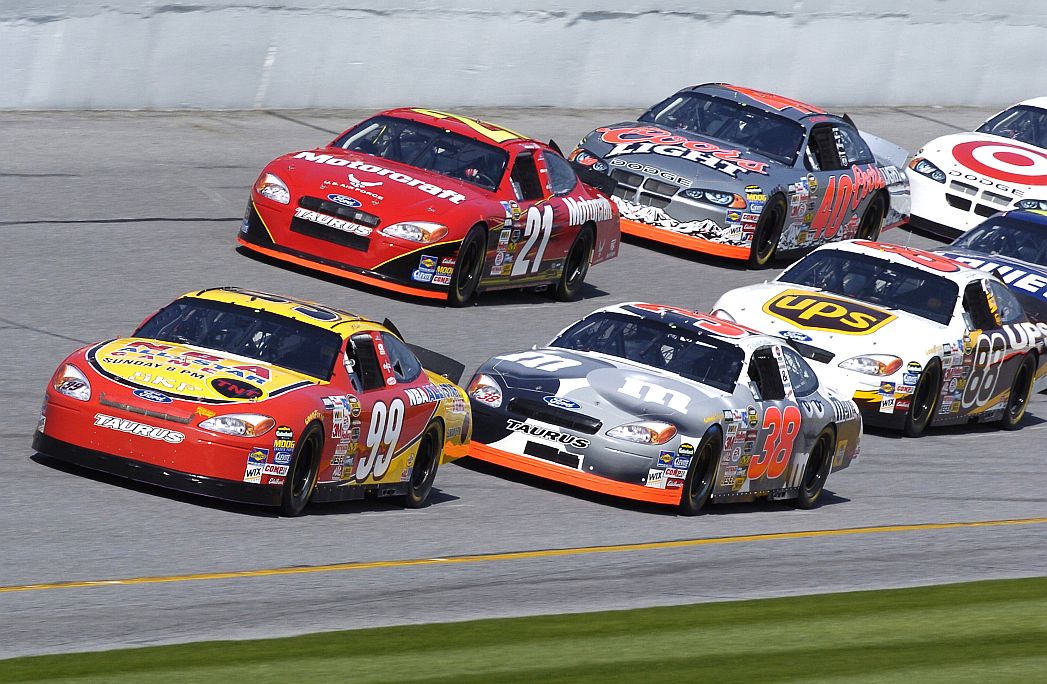 I happened to be in Charlotte, North Carolina, a couple months ago at the National Association of Counties’ annual conference. The conference was held in the convention center, which also happens to be the home of the NASCAR Hall of Fame – something I was not aware of until providence deposited me on the doorstep of the convention center.