The Geos Institute is assisting communities in their climate adaptation planning by providing climate projections, workshop facilitation, and reports. Here’s an update from the Central Oregon ClimateWise process:
Deschutes county in Central Oregon has adopted the largest wetland inventory in Oregon; nearly 19,000 acres. Peter Gutowsky, Principal Planner, says the Deschutes county commissioners all approved, with no one testifying in opposition. He adds, “This is a testament to a program that produces multiple ecological benefits, including some needed resiliency in the face of changing climate conditions.”
Bruce Riordan sent us his “unofficial takeaways” from the climate change adaptation workshop organized by the Kresge Foundation and the Geos Institute (Portland Oregon 2012). Riordan is the Climate Strategist for the Bay Area Joint Policy Committee. Here’s an excerpt. For the longer list, send Riordan an email.
It’s not “climate adaptation.” It’s protecting the health of our vulnerable seniors, keeping our critical roads, airports, etc. in use, saving our bay, making sure we have enough water (homes/agriculture/wildlife), keeping the power on through big storms…
Listen first. What is important to you and your community right now? (Probably not “climate change.”) What changes–weather, animals, growing season, etc.– are you noticing in your neighborhood, community, or region?
Personal relationships. We are often way too in love with our plans, strategies and science. (Problem: My slides didn’t convince them. Solution: more slides!) At least half the battle to really move a community to adaptation work is who trusts you, who you know, etc. Similarly, a few great and trusted champions can turn a whole room.
Mainstreaming. Make sure that climate impacts are not seen as something separate and exotic, but are integral parts of general plans, zoning codes, hazard/disaster mitigation plans, transportation plans, infrastructure maintenance plans, etc. Show overworked public agency staff that they are already considering/doing some of things–now climate adds another element or twist.
Is this plan necessary? Most local government planning departments aren’t exactly awash in resources these days. A call for a comprehensive adaptation plan may go 100% nowhere or, if undertaken, become just a recipe for “shelf candy.” Instead, look at the 2-3 most pressing issues in a community and focus on them first. Or, pick one initial topic that looks like an easy winner.
The central Oregon counties of Jefferson, Deschutes, and Crook provide their residents with dramatic contrasts, stunning vistas, and high quality of life. From the Deschutes and Ochoco National Forests to the Crooked River National Grasslands, Mount Bachelor to Lake Billy Chinook, and the urban center of Bend to the agricultural lands surrounding Madras, Prineville, and Redmond, central Oregon offers a diversity of settings, experiences, and opportunities for those calling this region home as well as those looking for a place to visit with cultural, recreational, and scenic attractions.
The Saint Johns River drainage basin has experienced significant change over the past century as the basin was altered to make way for agricultural, residential, industrial, and commercial centers. In addition to population growth (seven million people are predicted to live in the basin by 2020; a doubling of 2008 numbers), the basin is expected to experience substantial impacts over coming decades brought on by climate change.
November 20, 2011 By Dennis Odion and Dominick DellaSala
As scientists who have studied wildfires in our area, we are concerned that information provided to the public about fire management is not based on sound science. This has led to counterproductive actions and left the most important fire management needs unaddressed. Read more…
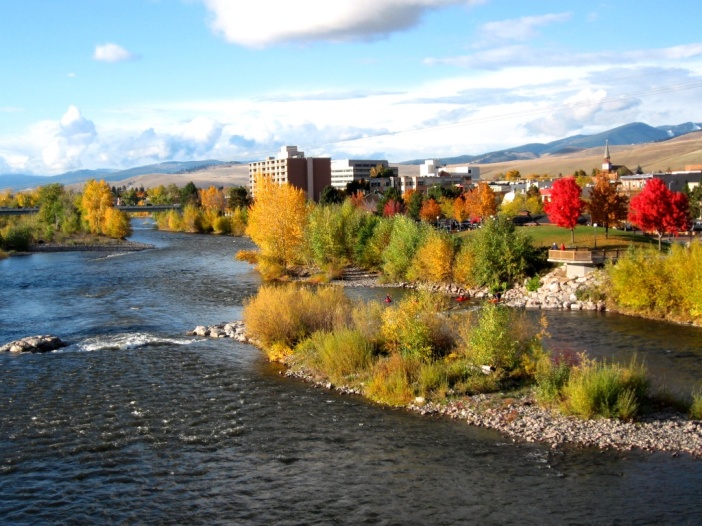
Missoula County is host to a diversity of people, local industries, intact ecosystems, and dramatic scenery. Its rivers and forests provide abundant opportunity for outdoor activities, while the university and downtown Missoula provide culture and entertainment. When people are asked why they live in Missoula County, they often refer to the high quality of life.
The Geos Institute, based in Ashland, Oregon, has developed tools and methodology to help communities respond and adapt to the pressures of climate change. Yesterday, I attended a presentation at the GIS in the Rockies by Jessica Leonard, geospatial analyst at the institute, and learned more about their approach and their projects. Leonard stated at the start of her talk that, “GIS helps us become visionary rather than reactionary.”
Conservation groups, logging industry critical of draft as Friday deadline nears
The Bulletin By Jeff Barnard / The Associated Press
GRANTS PASS — After months of tinkering, the Obama administration is due out this week with its last-ditch plan for saving the northern spotted owl from extinction. Read more…
Fresno County’s vibrant agricultural economy, scenic slopes of the southern Sierra Nevada range, and dramatic rivers beginning at the highest elevations and extending across the valley floor make the Fresno region a special place. Many future changes are expected, however, and many challenges already affect the quality of life in Fresno County and the surrounding region.
The Geos Institute’s ClimateWise® Program offers a science-based process that emphasizes the local community’s unique situation and needs, and integrates social, economic, and environmental issues in developing local solutions to the threat of climate change. Our process takes a non-‐political, risk assessment approach to planning for future conditions.
Our services are currently available to communities that may not otherwise have the resources to take a proactive approach to climate change planning. Our grant funding allows us to provide scientific and facilitation services to the communities chosen.
Each new ClimateWise® location requires the commitment of a locally-respected organization (convening partner) that drives the process and serves as the local face for ClimateWise®. Examples of convening partners include city, county, or tribal government, regional planning organizations, watershed councils, chambers of commerce, and non-governmental civic organizations. We invite potential convening partners to submit a request for us to undertake a ClimateWise project in their region.
For more information contact: Marni Koopman, Climate Change Scientist, via email: marni (at) geosinstitute.org, or call 541.482.4459 x 303.
Learn more about the ClimateWise® program by clicking the links below:

 Reports:
 Report:
 Reports and Handouts:
 Reports:
 The Geos Institute’s ClimateWise® Program offers a science-based process that emphasizes the local community’s unique situation and needs, and integrates social, economic, and environmental issues in developing local solutions to the threat of climate change. Our process takes a non-‐political, risk assessment approach to planning for future conditions.