Fall 2013 ClimateWise Enews
- IPCC Fifth Assessment WG1 Report Released
- Project Round-up
- New Reports & Data
- Funding Opportunities
IPCC Fifth Assessment Working Group 1 Report Released
 The International Panel on Climate Change (IPCC), established by the United Nations Environmental Program (UNEP) in 1988, releases a report on the current state of climate change knowledge along with potential environmental and socio-economic impacts every 6-7 years. Working Group 1 (WG1), tasked with reporting on “The Physical Basis” and “Summary for Policymakers,” recently released its contribution to the Fifth Assessment Report. Working Groups II and III, covering vulnerabilities, adaptation strategies, and mitigation, will release reports in the coming year. The IPCC does not conduct any research of its own, rather it reviews the body of scientific research and draws on consensus and peer reviewed literature – over 9,200 scientific publications are cited in the report issued by Working Group 1! There are 209 Lead Authors and 50 Review Editors from 39 countries. More than 600 experts provided additional knowledge or expertise.
Important headlines from the Summary for Policymakers:
- Human influence has been detected in warming of the atmosphere and the ocean, changes in the global water cycle, reductions in snow and ice, sea level rise, and climate extremes. This evidence for human influence has grown since AR4. It is extremely likely that human influence has been the dominant cause of the observed warming since the mid-20th century.
- Warming of the climate system is unequivocal, and since the 1950s, many of the observed changes are unprecedented over decades to millennia. The atmosphere and ocean have warmed, the amounts of snow and ice have diminished, sea level has risen, and the concentrations of greenhouse gases have increased.
- The atmospheric concentrations of carbon dioxide (CO2), methane, and nitrous oxide have increased to levels unprecedented in at least the last 800,000 years. CO2 concentrations have increased by 40% since pre-industrial times, primarily from fossil fuel emissions and secondarily from net land use change emissions. The ocean has absorbed about 30% of the emitted anthropogenic carbon dioxide, causing ocean acidification.
- The rate of sea level rise since the mid-19th century has been larger than the average rate during the previous two millennia (high confidence). Over the period 1901–2010, average sea level rose by 0.19 [0.17 to 0.21] m.
For more information:
Stay tuned for our run down of WG2: Impacts, Adaptation and Vulnerability. The report is expected to be released in mid-March 2014.
EPA Reports Climate Change Impacts in 20 Watersheds
In a new report published by the EPA, results from watershed modeling in 20 large U.S. drainage basins were assessed on their sensitivity of streamflow, nutrient, and sediment loading to a range of likely mid-century (2041-2070) climate change and urban scenarios. In many study areas, the simulations suggest a likely change in streamflow and water quality endpoints.
Key Findings:
“There is a high degree of regional variability in the model simulated responses of different streamflow and water quality endpoints to a range of potential mid-21st century climatic conditions throughout the nation. Comparison of watershed simulations in all 20 study areas for the 2041-2070 time horizon suggests the following hydrologic changes may occur:
- Potential streamflow volume decreases in the Rockies and interior southwest, and increases in the east and southeast coasts.
- Higher peak streamflow will increase erosion and sediment transport; loads of nitrogen and phosphorus are also likely to increase in many watersheds.
- Many watersheds are likely to experience significant changes in the timing of streamflow and pollutant delivery. In particular, there will be a tendency to shift from snowmelt-dominated spring runoff systems to rain-dominated systems with greater winter runoff.
- Changes in nutrient and sediment loads are generally correlated with changes in hydrology.
- Changes in watershed water balance and hydrologic processes are likely in many regions of the nation.”

To read the full report, click here.
Even during the current fiscal situation, there are funding opportunities for vulnerability assessments and adaptation planning. We are interested in pursuing new partnerships with local communities, Tribes, and resource management agencies. Below are a few current funding opportunities.
- NOAA Climate Program Office has funding opportunities for nine competitions, organized around the Climate Program Office’s Climate Observations and Monitoring (COM); Earth System Science (ESS); Modeling, Analysis, Predictions, and Projections (MAPP); and Climate and Societal Interactions (CSI) Programs. Information about those should be available as soon as the federal government is back up and running. The current deadline for final applications is November 14, 2013.
- The Bureau of Indian Affairs (BIA) has up to $600,000 available in fiscal year 2013/2014 available for competitive grants for tribal adaptation, training, and tribal travel support to participate in technical training, workshops, forums and cooperatives. First round submissions are due November 29, 2013.
Thanks for reading! We are interested in your adaptation work and how our services might complement what you have underway so feel free to contact Marni Koopman, Climate Change Scientist for Geos Institute or call 541.482.4459 x303. Please keep in touch by signing up for ClimateWise News and “liking” Geos Institute on Facebook.
|
Managing Coast Redwoods for Resilience in a Changing Climate
Climate change is good for redwoods! What? How could that be true? Recent research shows that redwoods are growing at unprecedented rates, likely due to longer growing seasons, more CO2, and even lower fog levels that allow more sun. The news isn’t all so sunny, however. Models show that short-term benefits of climate change will be far outweighed by the long-term impacts from higher temperatures and changes to fog and other precipitation. Geos Institute and its partners, North Pacific Landscape Conservation Cooperative, Society for Conservation Biology, and EPIC, hosted a workshop and fieldtrip in early September to bring together scientists and mangers with expertise in redwood ecosystems. Few forests in the world have comparable species assemblages, enormous tree sizes, rich and structurally complex canopies, and exceptional biomass as the coast redwoods (Noss 2000, DellaSala 2011). Yet, there is no comprehensive strategy currently available for helping managers prepare coast redwoods for climate change and land-use stressors despite the global significance of these forests, their important role storing carbon, and their vulnerability to disturbances. The workshop brought together the diverse set of scientists and managers who work with redwoods to evaluate the leading science on stressors, including climate change, and identify and prioritize adaptation strategies for increasing the resilience of the redwood ecosystem. The all-day field trip provided participants with an opportunity to see first-hand the different strategies for moving young forests more quickly towards mature redwood structure.  Stay tuned for results from the workshop! We will compile a suite of best practices for redwood restoration and management for continued persistence as climate change progresses throughout the region. Noss, Reed F., ed. 2000. The redwood forest: History, ecology, and conservation of the Coast Redwoods. Washington D.C: Island Press.
Fort Collins Climate Change Adaptation and Planning Facilitation
The Geos Institute is pleased to announce a new partnership and project with the Brendle Group in Fort Collins, Colorado. Fort Collins has already established itself as a national leader in sustainability by setting goals and taking actions to reduce greenhouse gas emissions. With the launch of this planning effort, they are now taking steps to increase municipal and community preparedness in the face of climate change.
Building on past efforts of climate change scenario planning, we are developing a vulnerability assessment and adaptation planning framework to assist nine municipal departments in preparing for changes in temperature, precipitation patterns, wildfire, natural systems, weather extremes, and other variables. The framework will be available for other city departments and regional partners as well.
Southern Sierra Integrated Regional Water Management Plan
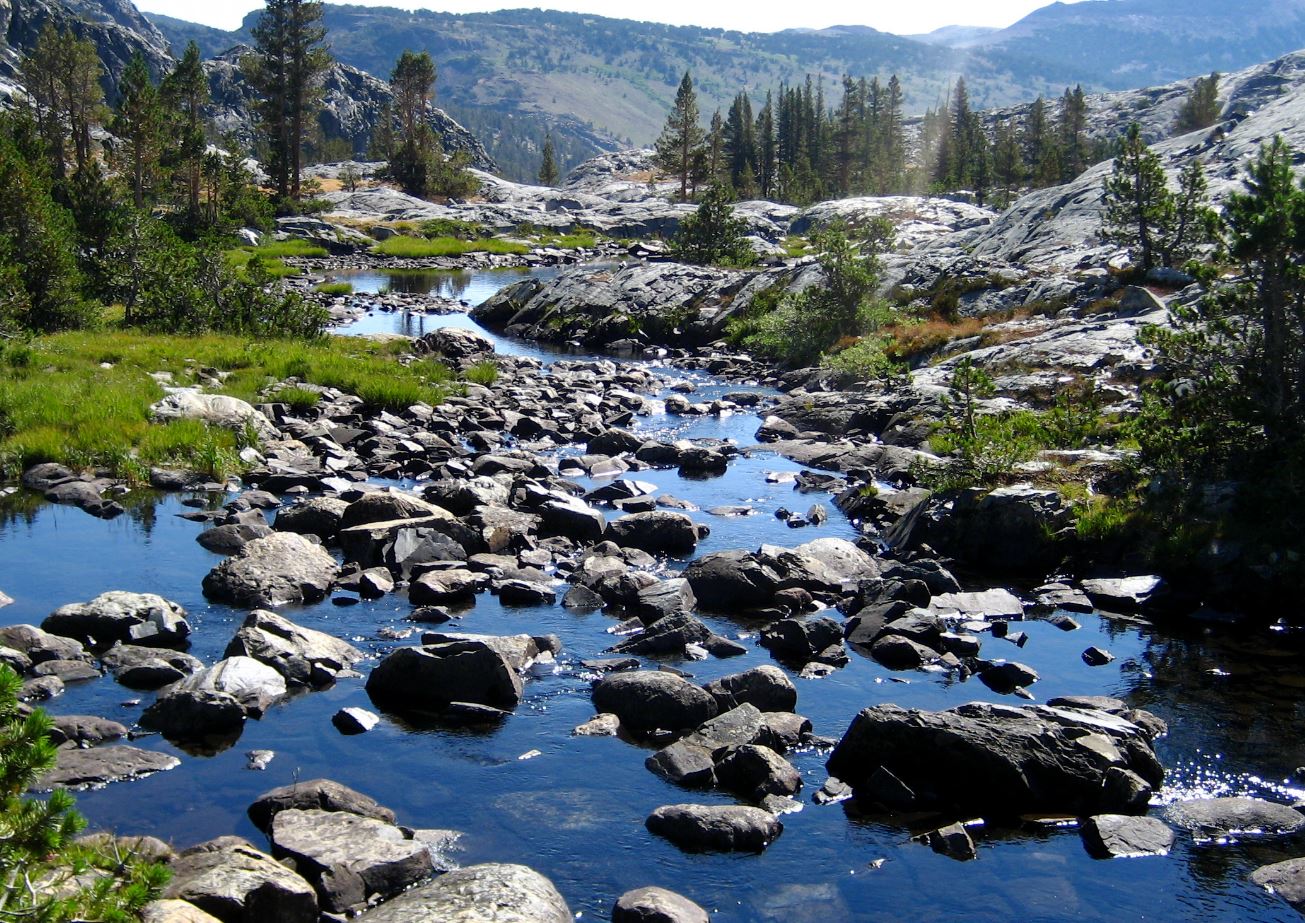
The Southern Sierra Region of California is the fourth largest water management unit in the state and includes portions of the Kern, White Rivers, Deer Creek, Tule, Kaweah, Kings, and San Joaquin watersheds in Madera, Fresno, and Tulare counties. This region sources water for the globally-important agricultural operations on the San Joaquin valley floor. Climate change is a critical issue facing water resources nationwide. With the Southern Sierra region having some of the state’s most iconic natural resources and the rivers already fully appropriated, climate change will have dramatic impacts on the area. Increasing temperature and changes in precipitation have already been observed, as reported in the Geos Institute publication “Integrated Strategies for a Vibrant and Sustainable Fresno County.” Climate change is expected to cause fluctuations in water yield and timing for run-off, necessitating changes in how the region manages its water. Kamansky’s Ecological Consulting has tapped the ClimateWise team to provide updated climate projections that will inform the water planning process for the SSIRWMP. These will include projections for temperature, precipitation, snowpack, runoff, water deficit, vegetation change, and wildfire. 
|


 Report:
 Reports: